People have always asked me, sometimes teasingly, sometimes with genuine interest, why do I love old things so much. Why do I cherish what others consider “grandma-y.” Why the worn, the weathered, the imperfect, when there’s so many “new, better” things out there. But really, to me the better question should be, what’s not to love?
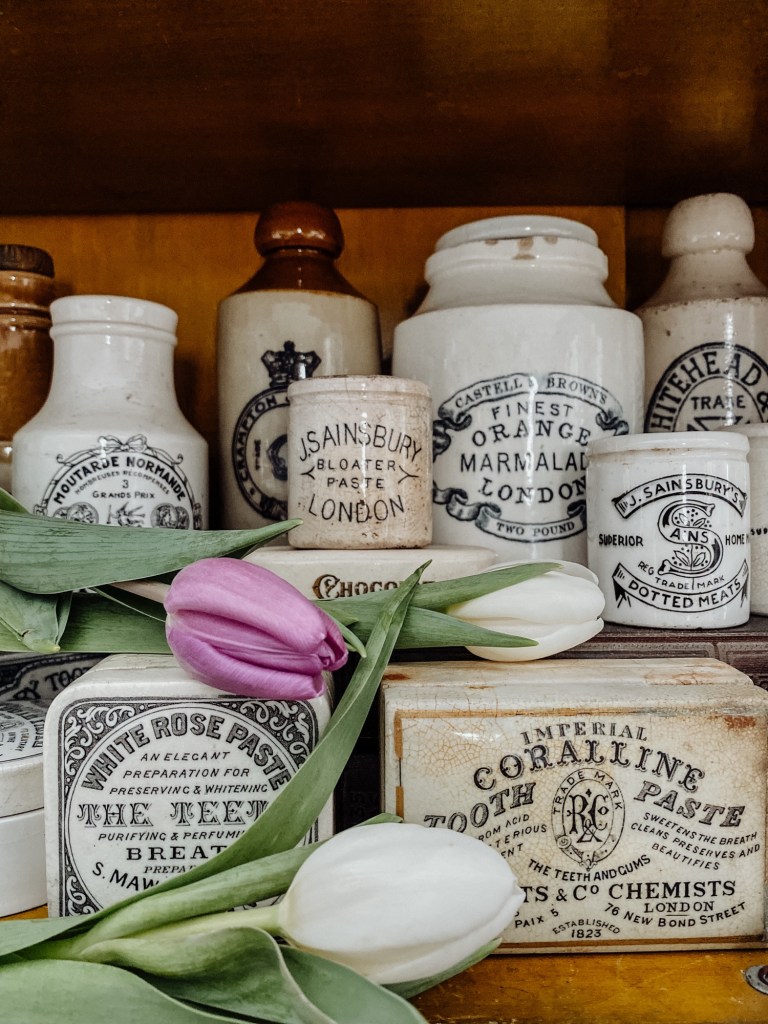
Take a piece of ironstone, for example. It might be 180 years old. (I, for one, own several of these pieces.) Their surfaces are often cracked with fine lines, some have chips along the edges, or even cracks in various places. By modern standards, they’re flawed, easily replaceable. Disposable, even. But think about what these have lived through.
That simple dish has existed through generations, through world wars, through quiet family dinners, through hands that held it long before we even existed. It has been used, loved and maybe even broken, yet still kept and potentially even cherished. And despite everything, it still serves its purpose. It still holds, still carries, still shows up. There’s something deeply human in that.
Antique furniture tells the same story. Think about how things used to be built. They were constructed intentionally, slowly with painstaking craftsmanship and care. These pieces weren’t designed for a seasonal trend, but for a lifetime. They were made to last. To endure. And somewhere along the way, we stopped valuing that, in our homes and in ourselves. We’ve grown used to a culture that throws things away the moment they show wear. If it chips, replace it. If it cracks, upgrade it. If it’s no longer perfect, it’s no longer worthy.
And we don’t just do that with things. We do it with people too. We’ve become quick to toss aside friendships and relationships when they show even the smallest imperfections. If someone reveals a flaw, if a marriage hits a hard season, if things feel less than ideal or perfect, we’re so easily tempted to walk away instead of working through it. Somewhere along the way, we started expecting perfection from relationships that were never meant to be flawless.
People aren’t meant to live like that. We are not meant to stay untouched, unmarked or unchanged. The hard-earned lines on our faces, the softness or strength in our bodies, the experiences we carry, those are not flaws to hide. They are evidence of a life lived. They are our “crazing,” our worn edges, our story written right on the surface.
Like antiques, we become more ourselves over time, not less valuable. The people who have lived, who have endured, who have been through hard seasons and keep going, they hold something rare. Something you can’t manufacture in China. They hold depth. They hold character. They hold soul.
So maybe our ultimate goal is not to stay new. But instead it’s to last. To persevere. To be the kind of person who, despite the chips and cracks, still shows up and serves a purpose. Still holds meaning. Still carries beauty, not in spite of the wear, but because of it.
Perhaps the next time someone asks me why I like antiques so much, my answer is going to be simple: it’s because it’s how I want to live. I want to endure. I want to be storied and full of imperfections. Because the most valuable things aren’t the ones that stayed pristine, but the ones that were shaped by a life well-lived, held onto and proved they were worth keeping.


